How Accurate Are AI Summarizers?
Artificial intelligence has dramatically changed how people consume and process information. From students and researchers to businesses and publishers, AI summarization tools are now helping users extract key insights from massive amounts of content within seconds.
But one important question continues to dominate discussions around AI summarization technology:
How accurate are AI summarizers?
In 2026, AI summarization systems have become significantly more advanced thanks to transformer-based language models, contextual learning, and large-scale natural language processing (NLP). However, accuracy still depends on several critical factors, including the complexity of the content, the summarization model being used, and the intended use case.
This guide explores how AI summarizers work, what affects their accuracy, where they perform exceptionally well, where limitations still exist, and how users can maximize summarization quality.
What Does “Accuracy” Mean in AI Summarization?
Accuracy in AI text summarization refers to how well the generated summary preserves the original meaning, context, intent, and factual information from the source content.
An accurate AI summary should:
- Preserve key ideas
- Maintain factual correctness
- Avoid misleading interpretations
- Retain contextual meaning
- Eliminate unnecessary details
- Deliver readable and coherent output
The goal is not simply shortening content.
The real objective is compressing information without losing important meaning. This is where advanced AI summarization models outperform traditional rule-based systems.
How AI Summarizers Generate Summaries
Modern AI summarizers use advanced natural language processing and machine learning techniques to analyze content. Understanding what is AI text summarization and how it works can help users better evaluate summarization accuracy and AI-generated outputs.
The process usually involves:
1. Understanding Context
The AI scans the document and identifies:
- Topic relationships
- Important sentences
- Entities and keywords
- Semantic meaning
- Sentence dependencies
Unlike older summarization systems, modern transformer models understand contextual relationships between sentences.
2. Identifying Important Information
The system determines which information carries the highest informational value.
This includes:
- Main arguments
- Repeated themes
- Conclusions
- Statistical insights
- Named entities
Advanced models use attention mechanisms to prioritize critical information.
3. Creating the Summary
The AI either:
- Extracts important sentences directly
- Generates new condensed sentences
- Combines both techniques
This depends on whether the system uses extractive or abstractive summarization.
Are AI Summarizers Actually Accurate in 2026?
In many common use cases, modern AI summarizers are highly accurate.
For general content such as:
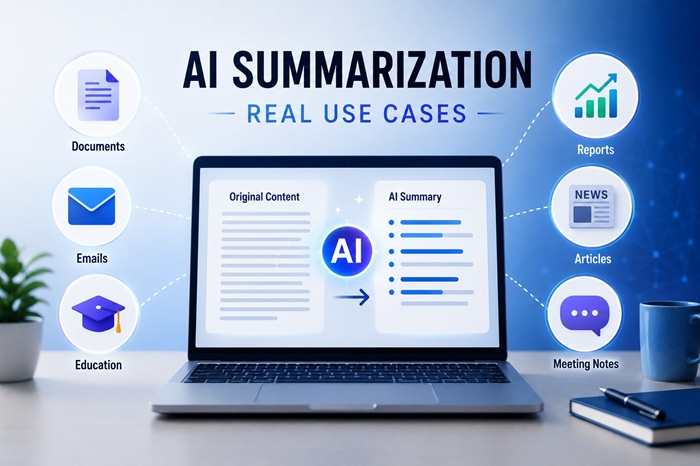
- Blog posts
- Articles
- Business reports
- Meeting notes
- Educational materials
- Research overviews
AI summarizers can often achieve strong contextual understanding and deliver reliable summaries within seconds. However, no AI summarization system is perfect.
Accuracy can vary depending on:
- Content complexity
- Writing quality
- Domain specialization
- Input length
- Technical terminology
- Model quality
In 2026, leading AI summarization systems are significantly more reliable than earlier generations, but human review is still recommended for highly sensitive or technical documents.
Improve reading efficiency and simplify long-form content instantly with TextSummarizer.io – an AI-powered WordPress text summarization platform built for faster workflows
Extractive vs Abstractive Accuracy
Different summarization methods impact accuracy differently.
Extractive Summarization
Extractive summarization selects sentences directly from the original content.
Accuracy Advantages
- Lower hallucination risk
- Better factual preservation
- Strong source alignment
Accuracy Limitations
- Can sound fragmented
- May reduce readability
- Often lacks natural flow
Because the content comes directly from the source material, extractive summarization is generally considered safer for factual accuracy.
Abstractive Summarization
Abstractive summarization generates entirely new sentences that capture the meaning of the original content.
Accuracy Advantages
- More human-like summaries
- Better readability
- Stronger compression capability
Accuracy Limitations
- Potential hallucinations
- Risk of missing nuance
- Possible factual distortions
Abstractive summarization is more advanced but also more challenging from an accuracy perspective. Modern AI systems increasingly combine both methods to improve overall performance.
Factors That Affect AI Summarization Accuracy
Several important variables influence how accurate AI-generated summaries are.
1. Content Complexity
Simple articles are easier to summarize accurately than highly technical documents.
For example:
- General news articles → usually high accuracy
- Medical research papers → more difficult
- Legal contracts → highly sensitive
- Scientific documentation → requires precision
The more specialized the material becomes, the greater the chance of contextual loss.
2. Input Quality
Poorly written or unstructured content reduces summarization accuracy.
AI systems perform better when content has:
- Clear structure
- Proper grammar
- Logical flow
- Consistent terminology
Messy or ambiguous writing can confuse summarization models.
3. Summary Length
Extremely short summaries may omit important details.
Longer summaries generally preserve:
- More nuance
- Better context
- Higher informational accuracy
This is why adjustable summary length is an important feature in modern AI summarizers.
4. Domain Expertise
General AI models may struggle with:
- Legal terminology
- Medical language
- Scientific notation
- Industry-specific jargon
Specialized AI models trained on domain-specific data often produce better results.
5. AI Model Quality
The underlying language model significantly affects summarization performance. Choosing the best AI text summarizer tool is important because modern transformer-based models provide better contextual understanding, improved readability, and stronger factual consistency.
Modern transformer-based architectures perform much better than older NLP systems because they:
- Understand context better
- Capture semantic relationships
- Process long-form text more effectively
- Improve coherence
This is one reason AI summarization quality has improved dramatically in recent years.
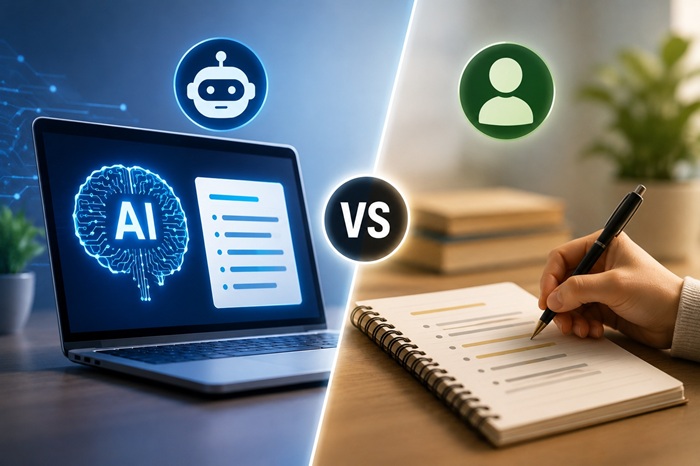
How Accurate Are AI Summarizers Compared to Humans?
Human summarization still performs better in situations requiring:
- Deep reasoning
- Critical interpretation
- Emotional understanding
- Subject expertise
- Strategic analysis
However, AI dramatically outperforms humans in:
- Speed
- Scalability
- Consistency
- Large-scale processing
For routine summarization workflows, AI tools are often more efficient and sufficiently accurate.
The ideal workflow in 2026 increasingly combines:
- AI-powered summarization
- Human verification
This hybrid approach balances speed with reliability.
Also Read: Top 9 Benefits of Using AI Summarizers for Productivity
Real-World Accuracy of AI Summarizers
AI summarization accuracy varies across industries.
Education
AI summarizers perform very well for:
- Study notes
- Textbook summaries
- Lecture overviews
- Revision material
Students can process educational content significantly faster.
Business
Companies use AI summarization for:
- Meeting transcripts
- Internal reports
- Emails
- Customer feedback
- Documentation
Accuracy is generally strong for structured business communication.
Journalism
Media organizations use AI summarization to:
- Generate article previews
- Summarize reports
- Create news digests
However, editorial review remains important for factual integrity.
Research & Academia
Researchers often use AI summarization for:
- Literature reviews
- Academic papers
- Research overviews
Accuracy is improving rapidly, but specialized terminology may still require manual review.
Legal & Healthcare
These industries require the highest levels of precision.
Because even small inaccuracies can create serious consequences, human oversight remains essential.
How to Improve AI Summarization Accuracy
Users can significantly improve summarization quality by following best practices.
Use High-Quality Source Material
Clear writing improves AI understanding.
Choose Appropriate Summary Length
Very short summaries may lose important information. Detailed summaries often preserve better context.
Review Critical Information
Always verify:
- Statistics
- Legal terms
- Medical content
- Financial data
- Technical details
before relying entirely on AI-generated summaries.
Use Advanced AI Summarization Platforms
Modern AI summarization systems built on advanced language models typically provide:
- Better contextual understanding
- Lower hallucination rates
- Improved readability
- Higher factual consistency
How TextSummarizer.io Helps Improve Summarization Accuracy
As AI summarization technology evolves, platforms like TextSummarizer.io are helping users process information faster while maintaining strong contextual clarity.
The platform helps users:
- Generate concise summaries quickly
- Simplify long-form content
- Improve reading efficiency
- Process research materials faster
- Reduce information overload
- Summarize articles and documents efficiently
For WordPress publishers, bloggers, researchers, students, and professionals, AI summarization tools can significantly reduce manual workload while improving productivity.
As modern publishing and research workflows continue evolving, accurate AI summarization is becoming an increasingly valuable productivity layer.
The Future of AI Summarization Accuracy
AI summarization systems are improving rapidly. Future developments are expected to include:
Better Context Retention
Next-generation models will preserve nuance more effectively.
Reduced Hallucinations
Advanced model architectures are expected to improve factual reliability.
Personalized Summaries
AI systems may generate summaries tailored to:
- Reading preferences
- Industry requirements
- Learning styles
- Professional goals
Multimodal Summarization
Future AI systems will increasingly summarize:
- Videos
- Audio
- Documents
- Meetings
- Images
within unified workflows.
Save hours of manual reading and generate accurate AI-powered summaries within seconds using TextSummarizer.io
Final Thoughts
So, how accurate are AI summarizers?
In 2026, AI summarization tools are more accurate, contextual, and useful than ever before.
For general content, business workflows, educational materials, and publishing applications, modern AI summarizers can deliver highly effective results while saving enormous amounts of time.
However, accuracy still depends on:
- Content complexity
- Model quality
- Domain specificity
- Human oversight
AI summarization is not replacing human intelligence entirely.
Instead, it is becoming a powerful productivity enhancement tool that helps users process information faster and more efficiently.
As AI models continue advancing, summarization technology is expected to become even more reliable, personalized, and deeply integrated into everyday digital workflows.