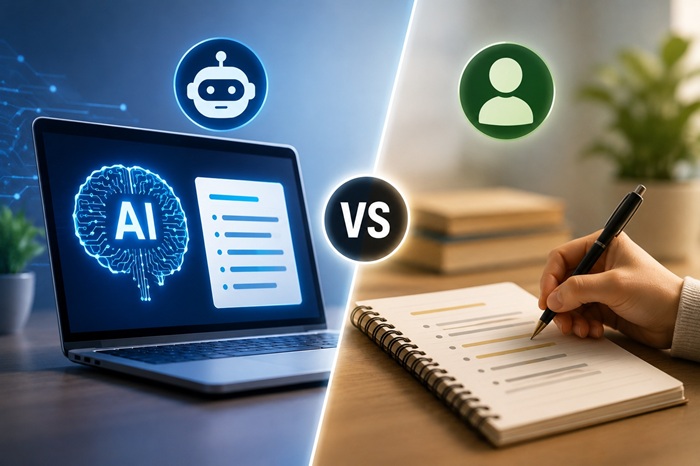
AI Summarization vs Manual Summarization: Which Is Better in 2026?
The explosion of digital content has completely changed how people consume information. Businesses, students, researchers, publishers, and professionals now deal with massive amounts of articles, reports, PDFs, emails, research papers, and online documents every single day.
As information overload continues growing, one major question has become increasingly important:
Is AI summarization better than manual summarization?
In 2026, AI text summarization has dramatically improved how users process long-form content. AI-powered summarization tools can now generate concise summaries within seconds, helping users save time and improve productivity across industries.
However, manual summarization still plays an important role in situations requiring deep reasoning, contextual understanding, and expert interpretation.
This guide explores the differences between AI summarization and manual summarization, including speed, accuracy, scalability, costs, use cases, limitations, and which approach performs better in modern workflows.
What Is AI Summarization?
AI summarization uses artificial intelligence and natural language processing (NLP) to condense large pieces of content into shorter, meaningful summaries while preserving the core message.
Modern AI summarizers can process:
- Articles
- Research papers
- PDFs
- Reports
- Blog posts
- Meeting notes
- Legal documents
- Emails
- Academic journals
Users looking to understand the broader evolution of AI summarization can explore the complete guide to AI text summarization in 2026.
Modern summarization systems rely on:
- Transformer models
- Machine learning
- Semantic analysis
- Contextual understanding
- Large language models
to generate accurate and readable summaries.
What Is Manual Summarization?
Manual summarization involves reading content, identifying important points, and rewriting the information into a shorter version manually.
This traditional method depends entirely on human interpretation and reasoning.
Manual summarization typically requires:
- Reading full documents
- Identifying key ideas
- Evaluating importance
- Rewriting information clearly
- Preserving contextual meaning
Although manual summarization takes more time, it often provides stronger nuance preservation and deeper contextual understanding.
AI Summarization vs Manual Summarization: Core Differences
| Feature | AI Summarization | Manual Summarization |
| Speed | Extremely fast | Time-consuming |
| Scalability | Very high | Limited |
| Human Effort | Minimal | Significant |
| Consistency | Consistent | Variable |
| Cost Efficiency | High | Lower |
| Contextual Reasoning | Moderate to advanced | Strong |
| Emotional Understanding | Limited | Excellent |
| Productivity | High | Lower |
| Large-Scale Processing | Excellent | Difficult |
Speed Comparison
One of the biggest advantages of AI summarization is speed.
AI systems can summarize thousands of words within seconds.
Manual summarization may require:
- Several minutes
- Hours
- Or even days
depending on document complexity and length.
For businesses handling large volumes of content, AI dramatically improves operational efficiency. This is one reason why AI summarizers are increasingly becoming essential productivity tools for modern digital workflows.
Accuracy Comparison
Accuracy depends heavily on the type of content being summarized.
For general content such as:
- Blog articles
- Business reports
- News content
- Educational material
AI summarizers now deliver highly accurate results in many cases.
However, manual summarization still performs better for:
- Complex legal documents
- Scientific research
- Medical records
- Strategic analysis
- Highly nuanced material
Users exploring how accurate AI summarizers are often discover that modern AI systems perform exceptionally well for routine summarization tasks but still benefit from human oversight in highly sensitive environments.
Contextual Understanding
Human summarization remains superior when deeper interpretation is required.
Humans can better understand:
- Emotional tone
- Intent
- Humor
- Sarcasm
- Cultural references
- Subjective nuance
AI models continue improving contextual understanding, but they may occasionally oversimplify or misinterpret complex ideas.
This is especially true in extractive vs abstractive summarization systems that generate new sentences.
Scalability and Efficiency
AI summarization dramatically outperforms manual workflows in scalability.
Businesses can process:
- Thousands of customer reviews
- Massive research datasets
- Internal reports
- Meeting transcripts
- Support tickets
within minutes using AI-powered systems.
Manual summarization becomes difficult and expensive at scale.
For enterprises focused on operational efficiency, AI summarization provides a major competitive advantage.
Simplify long-form content instantly with TextSummarizer.io – an AI-powered summarization platform built for WordPress publishing, research, and productivity workflows.
Cost Comparison
Manual summarization often requires:
- Skilled professionals
- Editorial teams
- Research analysts
- Subject experts
This significantly increases labor costs. AI summarization reduces these expenses by automating repetitive summarization workflows.
As AI infrastructure becomes more accessible in 2026, automated summarization continues becoming more cost-effective for businesses and publishers.
Consistency Comparison
AI summarizers provide highly consistent output because they follow structured processing patterns.
Human summarization quality may vary depending on:
- Experience
- Fatigue
- Expertise
- Writing ability
- Interpretation differences
For organizations requiring standardized summaries across large datasets, AI offers much stronger consistency.
Where Manual Summarization Still Wins
Despite rapid AI advancement, manual summarization remains critical in certain situations.
Legal Industry
Legal interpretation often requires precise contextual reasoning.
Small inaccuracies can create major consequences.
Healthcare
Medical summaries require extremely high accuracy and domain expertise.
Human validation remains essential.
Academic Research
Researchers frequently require nuanced interpretation beyond basic summarization.
Strategic Decision-Making
Executive summaries involving business strategy often benefit from human judgment and contextual reasoning.
Where AI Summarization Performs Best
AI summarization excels in high-volume content workflows.
Content Publishing
Publishers use AI summarization to:
- Create article previews
- Generate snippets
- Improve readability
- Simplify long-form content
Business Operations
Organizations summarize:
- Reports
- Emails
- Internal documentation
- Customer feedback
- Meeting transcripts
to improve productivity.
Education
Students and educators use AI summarizers to simplify:
- Study materials
- Lecture notes
- Textbooks
- Research papers
Research Workflows
Researchers use AI to quickly evaluate academic papers and identify relevant studies.
Related: The Smart Way Professionals Summarize Long Content in Seconds
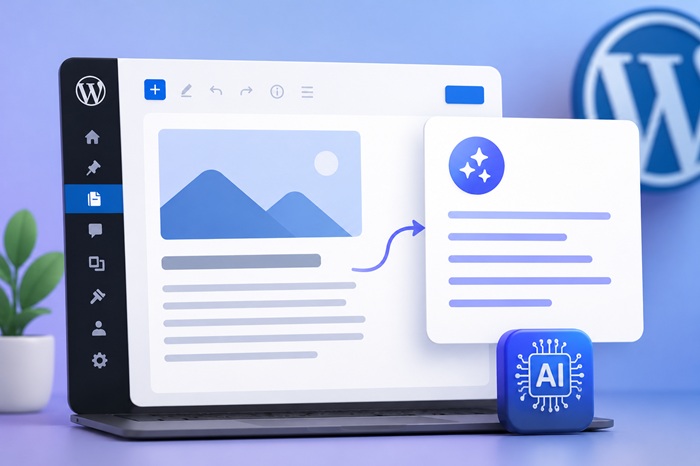
AI Summarization vs Manual Summarization for WordPress Publishing
Modern publishing workflows increasingly rely on AI summarization to improve efficiency.
Publishers looking to summarize WordPress blog posts in one click increasingly rely on AI-powered workflows for faster publishing.
For WordPress publishers and content teams, AI summarization helps:
- Reduce editing time
- Generate article summaries
- Improve reader engagement
- Simplify long-form articles
- Create digestible content experiences
As content velocity increases across the internet, manual summarization alone becomes difficult to scale effectively.
This is why many publishers now combine AI-powered workflows with editorial review.
The Rise of Hybrid Summarization Workflows
In 2026, many organizations no longer treat AI and manual summarization as competing systems. Instead, they combine both approaches.
The hybrid workflow often looks like this:
- AI generates the initial summary
- Humans review and refine the output
- Final summaries maintain both speed and accuracy
This approach balances:
- Efficiency
- Scalability
- Human reasoning
- Contextual reliability
Hybrid AI-human workflows are becoming increasingly common across enterprise publishing, research, and media industries.
How TextSummarizer.io Helps Users Simplify Content Workflows
As information overload continues growing, platforms like TextSummarizer.io help users process long-form content faster. Choosing the best AI text summarizer tool is becoming increasingly important for publishers, researchers, and professionals.
The platform helps users:
- Summarize articles instantly
- Simplify research-heavy content
- Improve reading efficiency
- Reduce manual workload
- Generate concise summaries quickly
- Process long-form content more efficiently
For publishers, students, researchers, marketers, and professionals, AI summarization tools are becoming an essential productivity layer in modern digital workflows.
The Future of Summarization
The future of summarization will likely combine:
- Advanced AI models
- Human oversight
- Personalized summaries
- Multimodal summarization
- Real-time processing
Future AI systems are expected to summarize:
- Documents
- Videos
- Meetings
- Audio
- Images
within unified workflows.
As transformer models continue advancing, AI summarization will become even more accurate, contextual, and deeply integrated into everyday productivity systems.
Save hours of manual reading and generate accurate AI-powered summaries within seconds using TextSummarizer.io for faster publishing and smarter workflows.
Final Thoughts
So, which is better: AI summarization or manual summarization?
The answer depends on the use case.
AI summarization delivers major advantages in:
- Speed
- Scalability
- Productivity
- Consistency
- Cost efficiency
Manual summarization still performs better for:
- Deep reasoning
- Complex interpretation
- Emotional understanding
- High-stakes decision-making
In 2026, the most effective workflows increasingly combine both approaches.
AI handles repetitive large-scale summarization efficiently, while humans provide contextual intelligence and final validation.
As artificial intelligence continues evolving, summarization technology will become even more powerful for businesses, researchers, publishers, and professionals navigating the growing digital information economy.